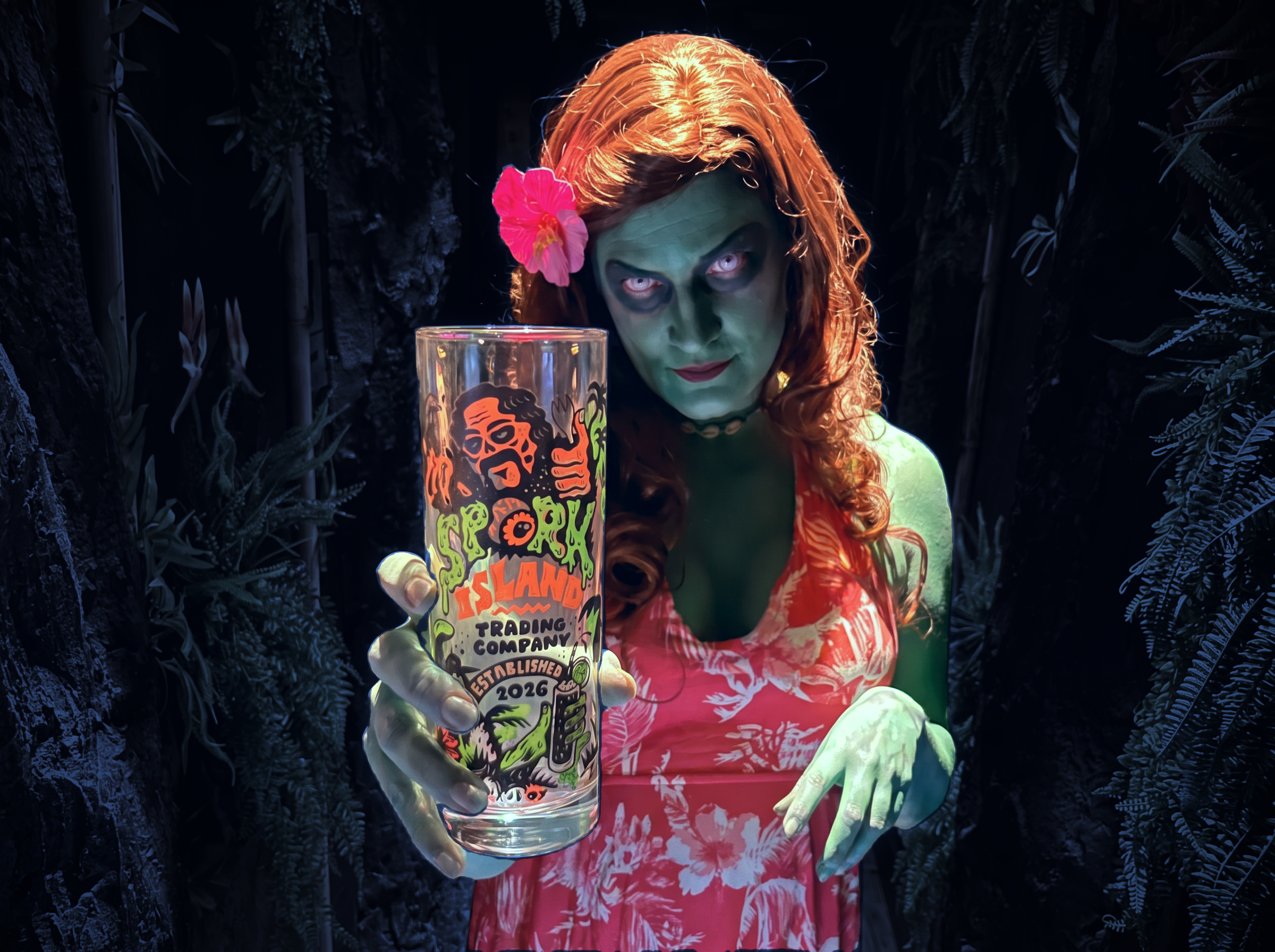
A Tiki Tribute to Pittsburgh’s Living Dead Legacy
Pittsburgh invented the modern zombie. And this October, Spork Island Trading Company is raising a glass to our proud home in the Zombie Capital of the World!
Meet the Spork Island Zombie Glass: a brand-new collectible tiki glass that pays tribute to Pittsburgh's Living Dead legacy, available only at Spork Island Trading Company. It's also the very first tiki glass made to commemorate Spork Island itself.
Meet the Zombie Glass
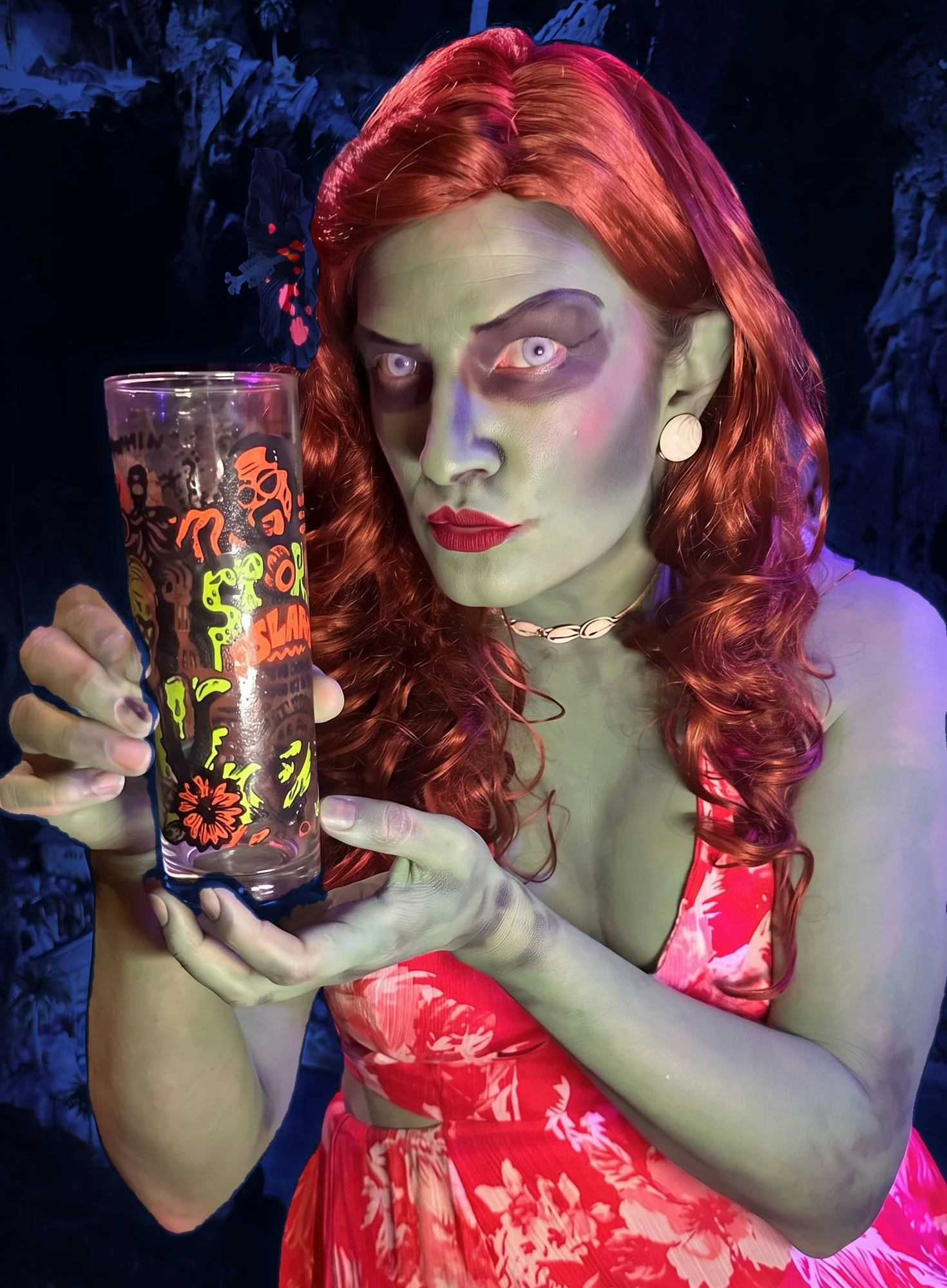
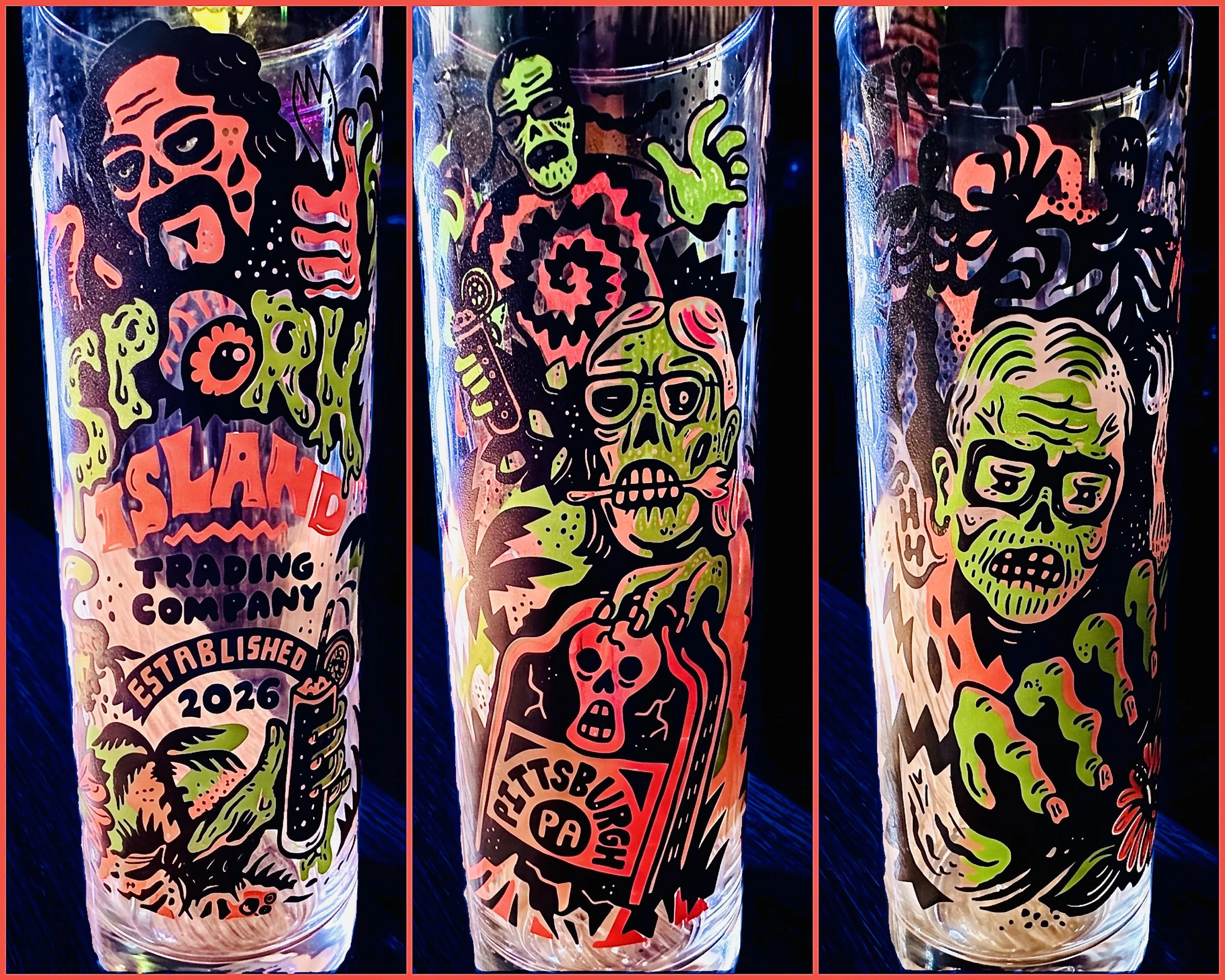
Designed by artist Frank Norton, the Zombie Glass is packed with references to the people and the movies that made Pittsburgh the Zombie Capital of the World. Dripping green lettering, a wide-eyed "O" in SPORK, a hungry zombie hand clutching a tiki drink, palm fronds, and "Established 2026" stamped front and center. Fans of the films will want to study it closely. There's more hidden in the design than you'll catch on the first pass.
The Zombie Glass sells for $20 on its own (no drink included), and only at Spork Island Trading Company in downtown Pittsburgh.
You won't find it online and you won't find it anywhere else!
Pittsburgh is the Zombie Capital of the World
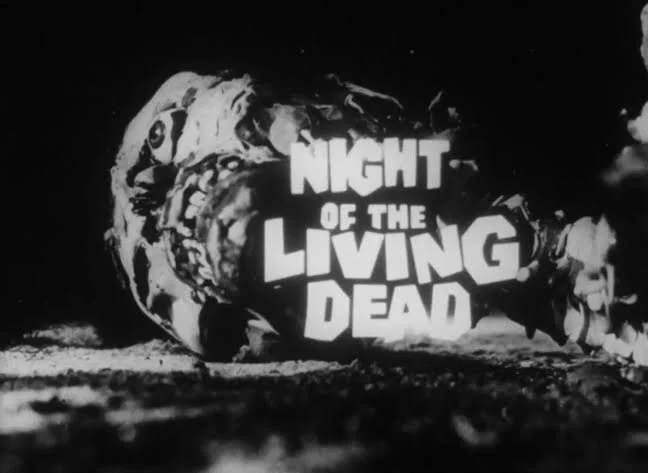
In 1968, a young Pittsburgh filmmaker named George A. Romero shot a low-budget horror movie on a farm in Evans City, about 25 miles north of the city, using local residents as extras. Night of the Living Dead premiered on October 1, 1968, at the Fulton Theater, which is today's Byham Theater, just a few blocks from Spork Island's front door in the Cultural District. It went on to gross millions worldwide and rewrote the rules of horror.
Romero kept the dead walking in Western Pennsylvania. Dawn of the Dead (1978) turned Monroeville Mall into the most famous shopping center in horror history, and Day of the Dead (1985) took the zombies underground. Along the way, Pittsburgh's own Tom Savini became a legend of horror special effects. Generations of fans still make the pilgrimage to the filming locations, and every October the city's love of a good scare comes out of the grave.
Tiki has its own zombie connection, too. The Zombie cocktail was invented in the 1930s by Donn Beach, the father of tiki, and it became one of the most famous (and most dangerous) drinks of the tiki era. A zombie glass in a Pittsburgh tiki bar? It was always meant to be.
Tiki drinks for spooky season
October at Spork Island means dim lights, flickering torches, and a cocktail menu that already leans a little dark. While you're here for the Zombie Glass, here are a few drinks that fit the season:
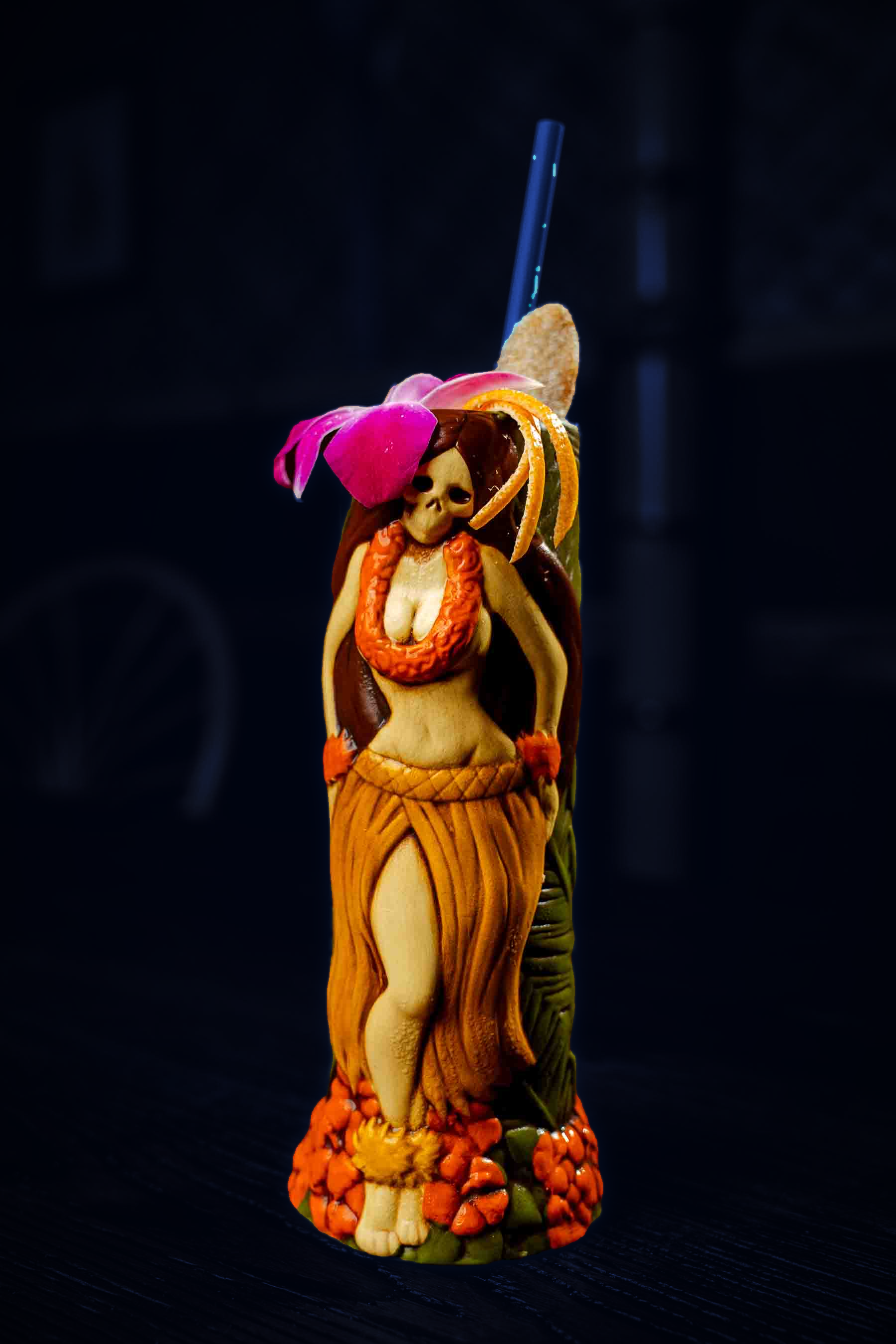
The Volcano. Our shared, flaming showpiece for four to eight people. Demerara and aged rums, passion fruit, honey and pistachio orgeat, set ablaze at your table. Enjoy the show.
Rogue Wave. Served in a mug fit for the dark depths. Bourbon, falernum, ginger, mango and pineapple.
Anne Bonny. Named for the legendary pirate and served in a skeleton hula-girl mug. Vodka, ginger, spice, lime and grapefruit.
Nine More Lives. Every cat needs a few extra lives in October. Pineapple rum, Campari, overproof rum, lime, cinnamon and sparkling wine.
Last Ship Home. A smoky ghost-ship of a drink: blanco tequila, mezcal, peppered wildberry shrub, absinthe and poblano saline.
Galeophobia. The fear of sharks, in a shark mug. Blueberry rum, macadamia, sangria, orgeat and cinnamon. A Spork classic since 2019.
See all sixteen signature cocktails on our Drinks page. Several contain tree nuts or dairy, so please tell your server about any allergies.
Plan your October visit
Halloween falls on a Saturday this year, and Spork Island is open. Whether you're heading to a show in the Cultural District, celebrating with friends, or just collecting every piece of Pittsburgh zombie history you can get your hands on, this is the month to visit.
Spork Island Trading Company is at 946 Penn Avenue in Downtown Pittsburgh. Doors open at 4 pm, Tuesday through Saturday. Walk-ins are welcome, and groups can reserve a booth. Parking tips are on our Parking page. 21+. Our schedule is subject to change, so always check our website before planning a visit.