Flaming volcano bowls. Mugs shaped like skulls, sharks and smirking cats. Rum drinks with names like Zombie and Pain Management, built from a dozen ingredients and finished with an orchid. If you've noticed tiki bars popping up everywhere lately, you're not imagining it. Tiki bar culture is having its biggest moment in decades, and Pittsburgh is right in the middle of it.
So what exactly is tiki? Where did it come from, how did it nearly disappear, and why is everyone suddenly craving a drink served in a ceramic coconut? Here's the short history of tiki culture, why it's booming in 2026, and where Spork Island Trading Company fits in.
What is tiki culture?
Tiki is an American invention. It's a style of bar, cocktail and design that grew up in 1930s California, built around a romantic, Hollywood-tinted daydream of the South Pacific. A true tiki bar is a total escape: dim lighting, bamboo and thatch, carved wood, glowing pufferfish lamps, exotica music, and complex rum cocktails served in elaborate mugs and bowls.
The drinks are the heart of it. Classic tiki cocktails layer multiple rums with fresh citrus, house-made syrups and spices, a style that cocktail historians now recognize as one of the original forms of craft bartending. Tiki was making its own syrups and squeezing its own juice decades before "craft cocktails" were a thing.
How tiki started: Don the Beachcomber and Trader Vic
The story begins in Hollywood in the early 1930s, just as Prohibition ended. A young adventurer named Ernest Gantt, who would later rename himself Donn Beach, opened a tiny bar called Don's Beachcomber, decorated with souvenirs from his travels through the Caribbean and the South Seas. Instead of the whiskey and gin drinks of the day, he served rum, cheap and plentiful after Prohibition, mixed into intricate "rhum rhapsodies" with fresh juices and his own secret syrups.
Donn invented drinks that are still poured today, including the Zombie and the Navy Grog. He guarded his recipes so closely that his bartenders worked from coded, numbered bottles. Hollywood stars packed the place, and Don the Beachcomber grew into one of America's first national chains of themed restaurants.
Across the bay from San Francisco, an Oakland bar owner named Victor Bergeron took the idea and ran with it. His Trader Vic's became tiki's other great empire, and in 1944 Vic created (or at least claimed to create, depending on whom you ask) the most famous tiki drink of all: the Mai Tai. The rivalry between Donn and Vic over who invented what is still debated by cocktail historians today.
The golden age of Polynesian pop
After World War II, tiki exploded. Servicemen came home from the Pacific with stories of the islands. Thor Heyerdahl's 1947 Kon-Tiki raft voyage became a bestseller. Hawaii became a state in 1959, and jet travel put the islands within reach. Through the 1950s and '60s, tiki was everywhere: in hotel lounges, suburban backyards, bowling alleys and A-frame restaurants with torches out front.
Pittsburgh had its own share. Post-war spots like Chin's Polynesian Garden gave Pittsburghers a tropical escape from the smoke and the cold of the industrial city.
The decline, and the rescue
By the 1970s and '80s, tiki had faded. The original recipes were lost or watered down into sugary premixes, the decor started to look dated, and many classic tiki palaces were torn down. For a generation, "tiki drink" meant something neon-colored with a plastic monkey on the rim.
Then came the rescue. Starting in the 1990s, a small group of collectors, artists and cocktail historians began digging up tiki's lost history. The most important was Jeff "Beachbum" Berry, who spent years tracking down retired bartenders and decoding Donn Beach's secret recipes, publishing them in a series of books. Suddenly bartenders could make the real thing again.
The craft cocktail movement did the rest. A new generation of tiki bars opened that took the drinks as seriously as any speakeasy: Smuggler's Cove in San Francisco (2009), Three Dots and a Dash in Chicago (2013), and Berry's own Latitude 29 in New Orleans (2014) among them. Tiki was cool again, and this time it was built on fresh juice, great rum and real technique.
The modern revival has also brought a more thoughtful conversation. Today's best tiki bars embrace tiki for what it is, a uniquely American fantasy with its own nearly century-long history, while staying respectful of the real Pacific Island cultures that inspired it.
Why tiki is so big in 2026
Tiki has had revivals before, but 2026 feels different. A few forces are coming together at once.
People want an experience, not just a drink. After years of minimalist bars with tiny glasses and quiet rooms, guests want somewhere that feels like an event. A great tiki bar is immersive: the lighting, the music, the mug and the drink all work together to take you somewhere else for a few hours.
Rum is having a moment. Bartenders say the whiskey boom has cooled and drinkers are exploring other spirits, especially rum. Today's guests know the difference between a Jamaican pot-still rum and a Demerara, and tiki is where rum shines brightest.
Maximalism is back. Tiki is the opposite of a restrained craft cocktail, and that's the point. Extravagant garnishes, flaming bowls and outrageous mugs are pure fun, and people are ready for fun.
Tiki was made for your camera. Few drinks photograph like a tiki cocktail in a hand-sculpted mug. Social media has turned tiki mugs into collectibles, and many guests now plan their visits around the mug they want to take home.
Tiki is a whole hobby. Home bartenders, mug collectors, exotica record lovers and tiki events have built a passionate community that keeps growing, and that community loves discovering new bars.
Pittsburgh: a serious tiki town
Pittsburgh may be a long way from the South Pacific, but it has quietly become one of the most tiki-loving cities in America. Our long, gray winters make a tropical escape especially tempting, and the city's do-it-yourself creative streak has produced a dedicated scene of bartenders, artists and collectors.
The modern era runs right through the people behind Spork Island. Co-owner Steve Zumoff opened Tiki Lounge on East Carson Street back in 2002, one of the city's longest-running tiki bars. Neighborhood favorites like Hidden Harbor in Squirrel Hill helped put Pittsburgh on the national tiki map.
Where Spork Island Trading Company fits in
Spork Island Trading Company, which opened in July 2026 at 946 Penn Avenue in Downtown Pittsburgh's Cultural District, takes everything that makes tiki great and goes all in on the experience.
Walk in through Volcano Village and past the eight-foot volcano, then disappear into a world of waterfalls, thatched huts, jungle pathways, private booths and a hidden cave. It's an immersive tiki bar and restaurant designed to make you forget you're a block from the Benedum.
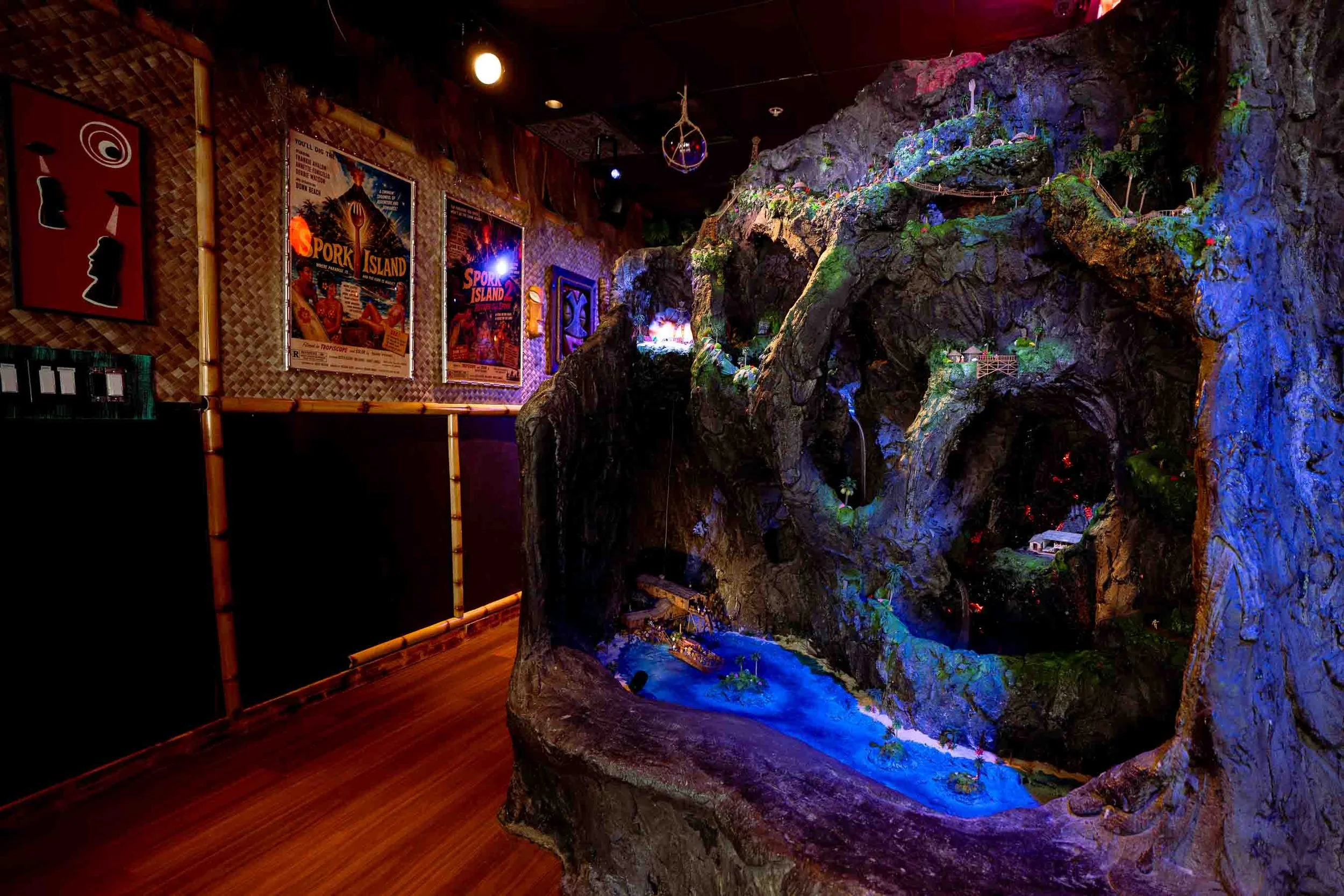
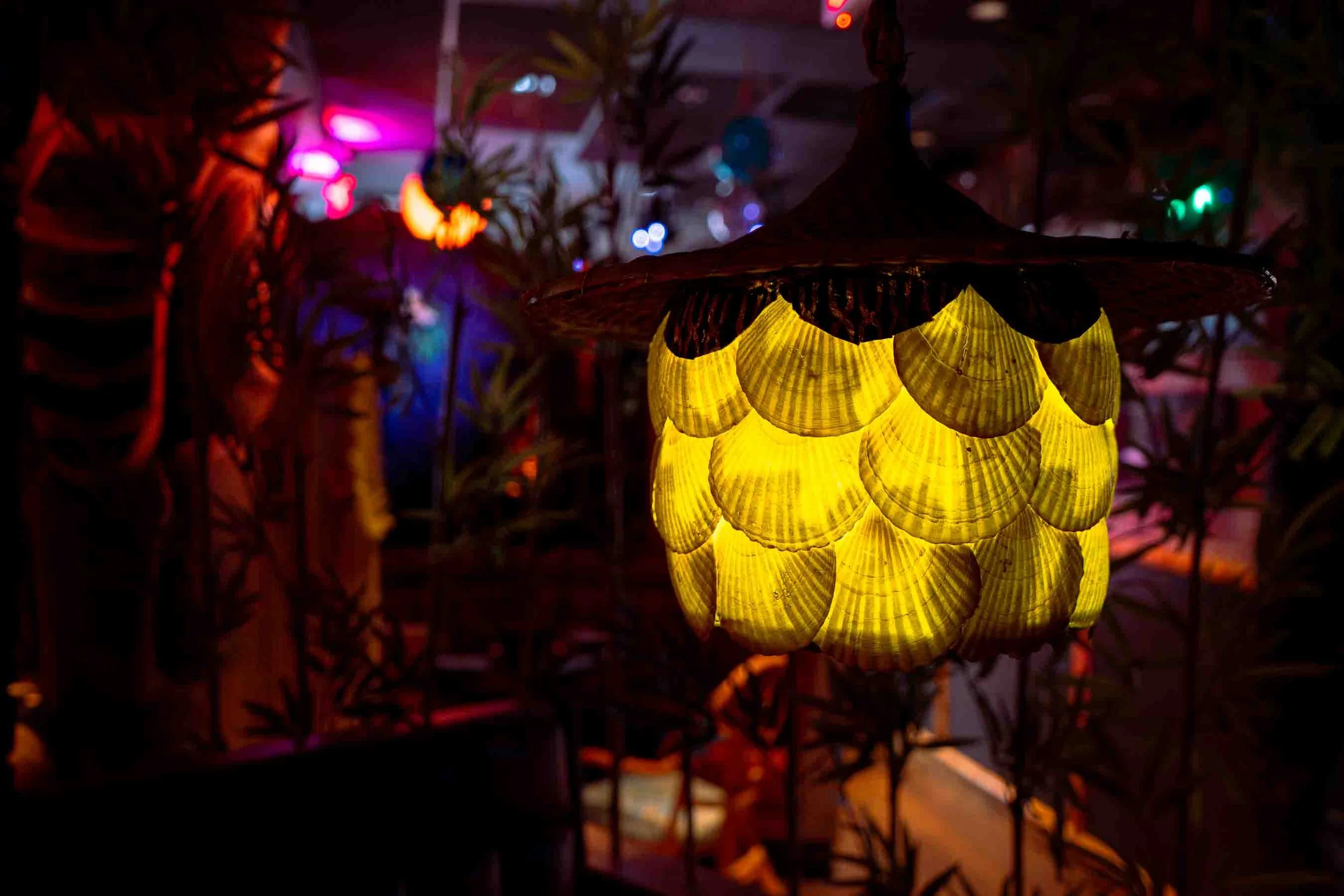
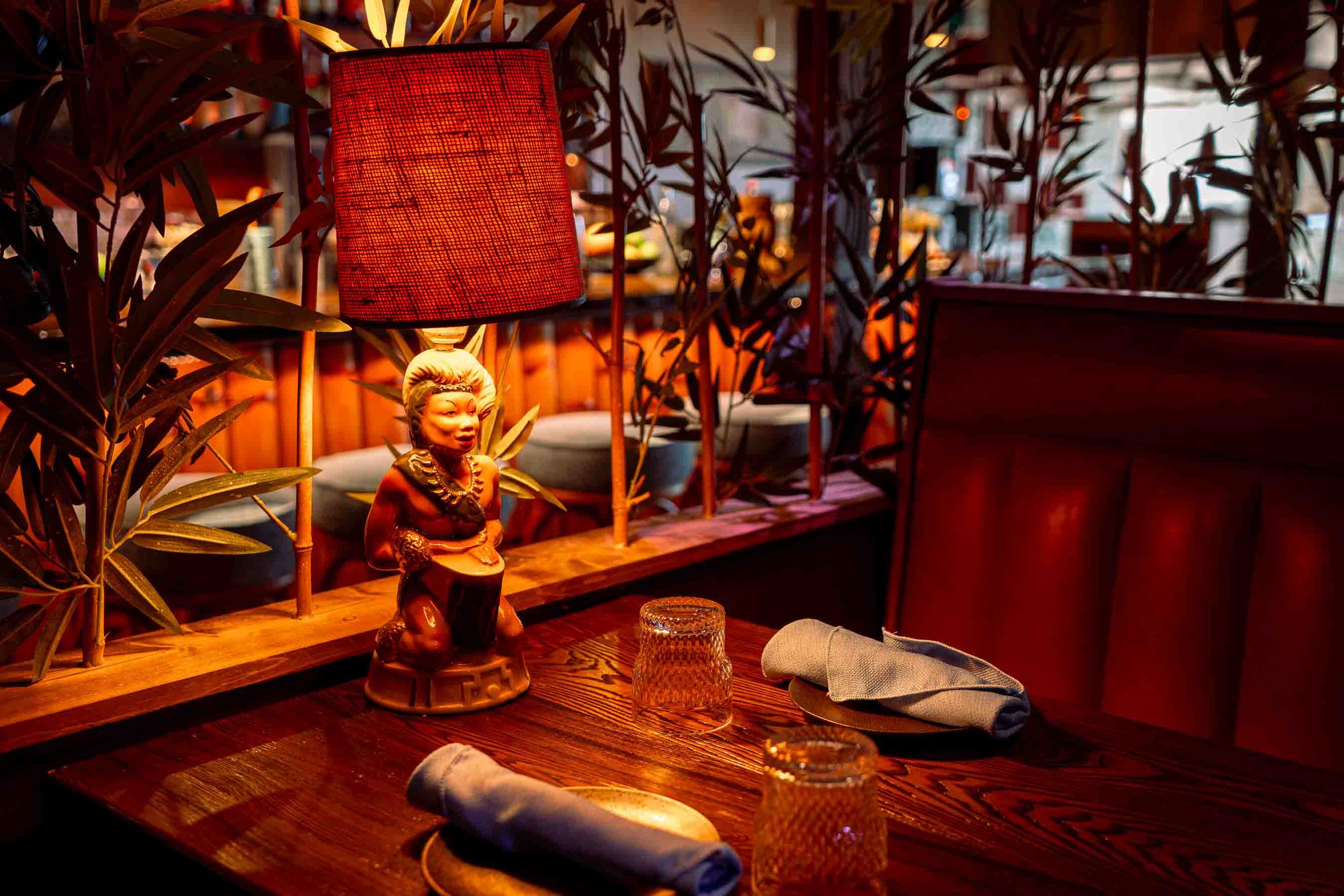
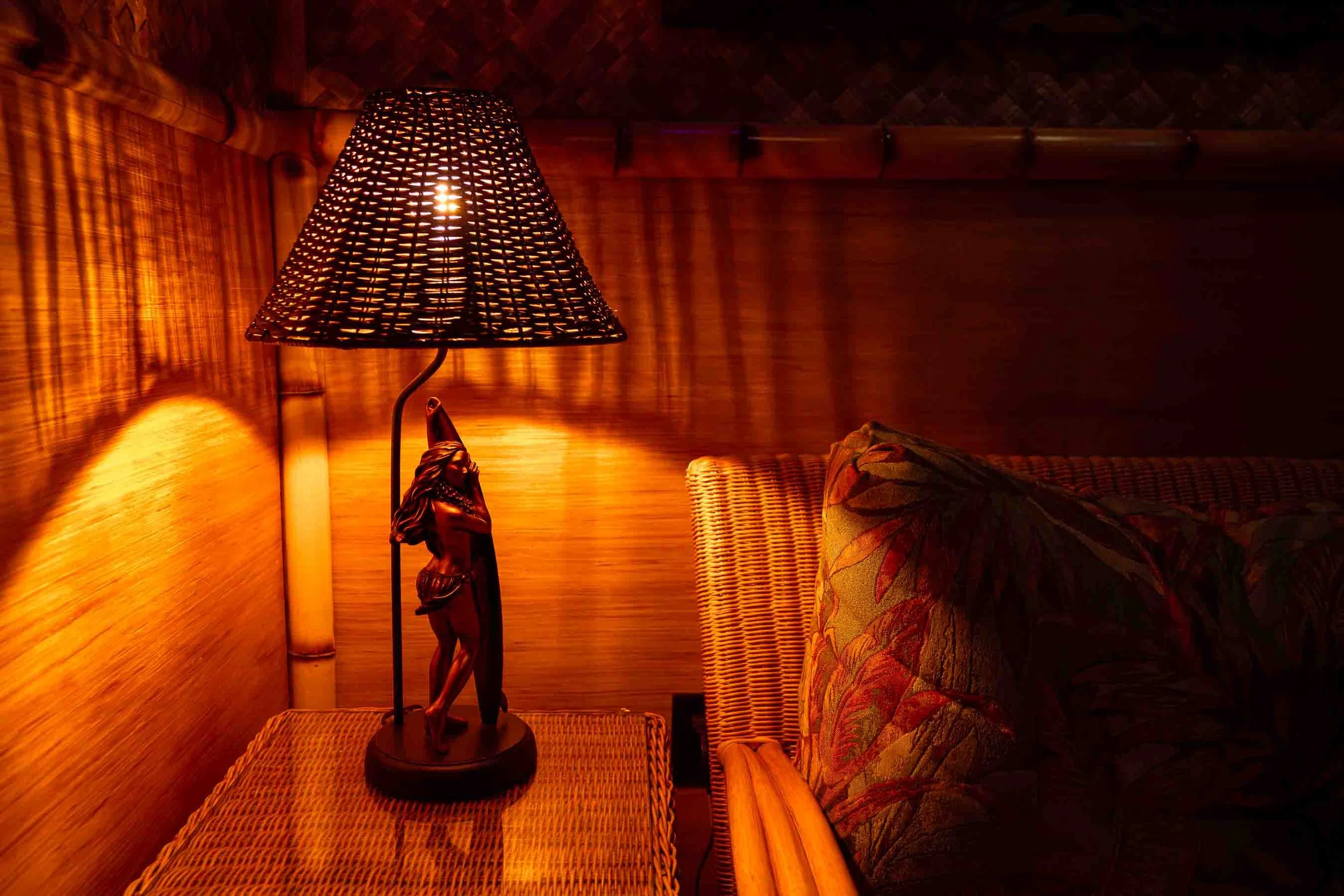
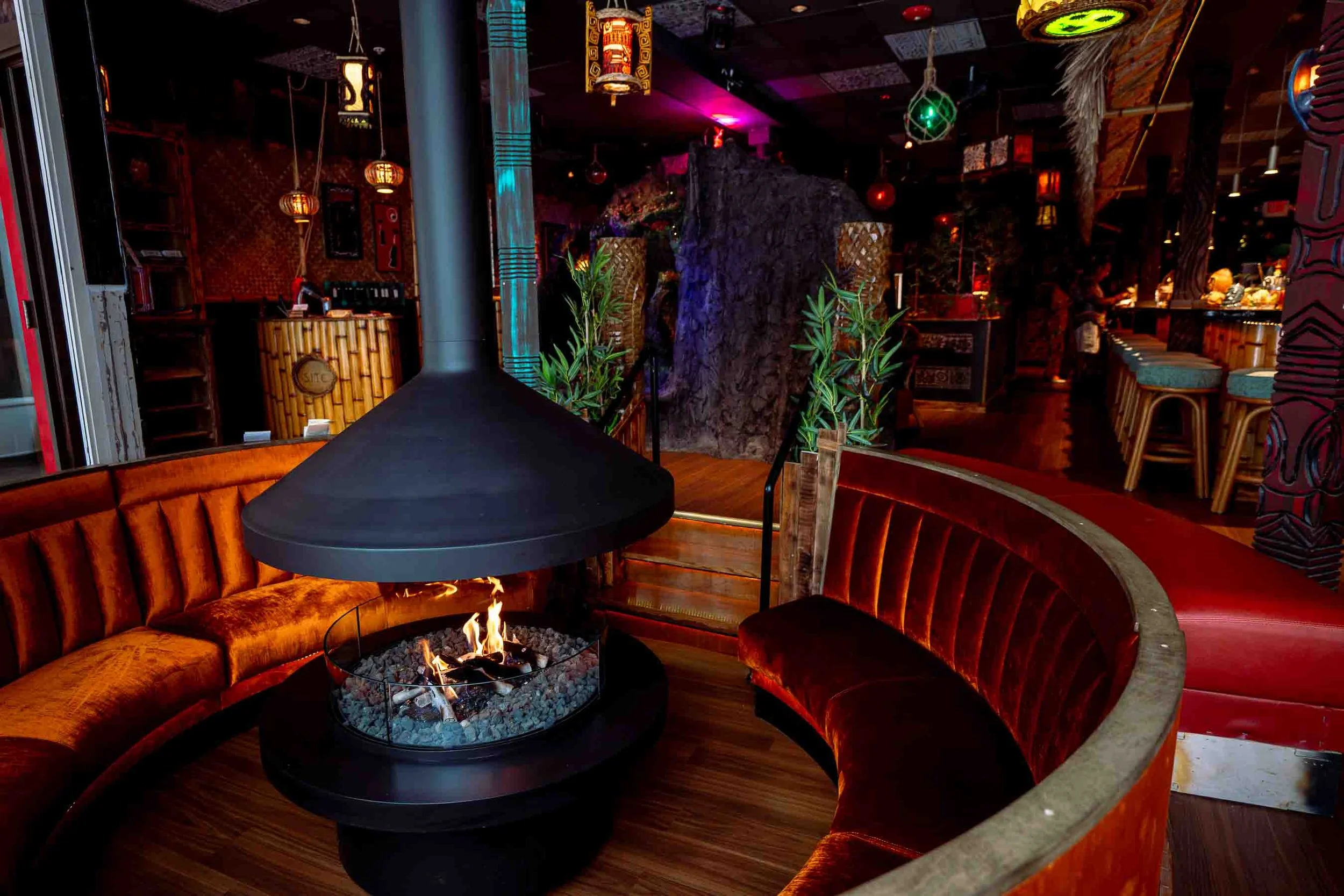
The cocktail menu honors tiki's roots while adding a Pittsburgh accent. The Pearl Diver is a classic credited to Donn the Beachcomber himself, dating to 1937. The Monongahela Mai Tai gives Trader Vic's most famous creation a hometown twist with pistachio orgeat. And The Volcano is a flaming, shareable showstopper for groups of four to eight. Many drinks come in collectible mugs you can take home, including original designs by the artist Thor. See the full lineup on our Drinks page.
The kitchen keeps pace with globally inspired shareable plates and yakitori from the grill, so you can make a night of it. Explore the full Food menu.
Spork Island is part of the 2026 tiki wave, but it's also built on decades of Pittsburgh tiki history. It's what happens when people who have been pouring tiki drinks in this city for more than twenty years get to build the tiki bar of their dreams.
Tiki FAQ
What makes a bar a tiki bar?
A tiki bar combines tropical, South Seas-inspired decor with rum-based cocktails made from fresh citrus, house syrups and spices, usually served in decorative mugs. The best tiki bars are immersive escapes.
Who invented tiki?
Donn Beach (born Ernest Gantt) opened Don's Beachcomber in Hollywood in the early 1930s and is considered the founder of tiki. Victor "Trader Vic" Bergeron built the other great tiki empire and is credited with the 1944 Mai Tai.
What is the most famous tiki drink?
The Mai Tai, followed closely by the Zombie and the Navy Grog.
Is there a tiki bar in Downtown Pittsburgh?
Yes. Spork Island Trading Company is an immersive tiki bar and restaurant at 946 Penn Avenue in the Cultural District. Doors open at 4 pm, Tuesday through Saturday. 21+.
Can I buy the tiki mugs?
Many of our cocktails are served in collectible mugs or glasses that you can purchase with your drink. Ask your server.
Come find the island
Ready to see what the tiki revival is all about? Spork Island Trading Company is at 946 Penn Avenue in Downtown Pittsburgh. Doors open at 4 pm, Tuesday through Saturday. Walk-ins are welcome, and groups can reserve a booth. Parking tips are on our Parking page. 21+. Our schedule is subject to change, so always check our website before planning a visit.